By the GradeHelp Team
There’s a certain feeling that comes with the end of summer. It’s a mix of excitement, anticipation, and just a little bit of “wait, how is it already August?”
If you’re a homeschool parent, that feeling also comes with a to-do list. And that list can feel overwhelming before you’ve even sharpened a single pencil.
Here’s the good news: the families who have the smoothest school years aren’t the ones with the most impressive curriculum. They’re the ones who took the time to set things up properly before day one. A little intentional preparation in the weeks before school starts pays dividends all the way through spring.
This guide walks you through exactly what to do — from reviewing last year to setting up the tools that will make this your most organized and informed homeschool year yet.
Step 1: Review Last Year Before You Plan This One
Whether this is your first year or your fifth, the best place to start is with an honest look backward.
What worked last year? What didn’t? Which subjects created the most friction, and which ones ran smoothly? What did your child genuinely enjoy — and what did they dread every single morning?
Spend an hour reviewing last year with clear eyes before you plan anything new. Ask yourself: What did you actually finish? What got dropped and why? The answers will shape every planning decision that follows.
This review isn’t about judging yourself. It’s about gathering the information you need to make better choices going forward. A curriculum that looked perfect on paper but caused daily battles isn’t worth repeating. A subject your child thrived in is worth expanding. A skill that didn’t quite click is worth addressing before you move on.
If you kept work samples from last year, pull them out now. Look at the work itself — not just whether it got done, but how it got done. Where were the errors clustering? What does that tell you about where to focus this year?
Step 2: Set Your Goals Before You Set Your Schedule
Before you open a single curriculum catalog or fill in a single calendar box, take time to define what you actually want this year to accomplish.
Don’t think in terms of chapters covered or pages completed. Instead, think about the skills, habits, and experiences you want your child to have by next June.
Pam Barnhill is the host of the Homeschool Better Together podcast and author of Plan Your Year: Homeschool Planning for Purpose and Peace. She has built her entire platform around one simple principle: vision first, logistics second. Her approach encourages parents to identify their family’s values and learning goals before filling in any schedule. Why? Because a schedule built around a clear vision is far more likely to survive real life than one built around a curriculum’s table of contents.
Ask yourself a few key questions. What do I want my child to be able to do by the end of this year that they can’t do right now? What subjects need more focus based on what I saw last year? Those answers become your filter for every planning decision that follows.
Step 3: Map the Year Before You Plan the Week
Once you have your goals, map your year before you try to schedule a single week.
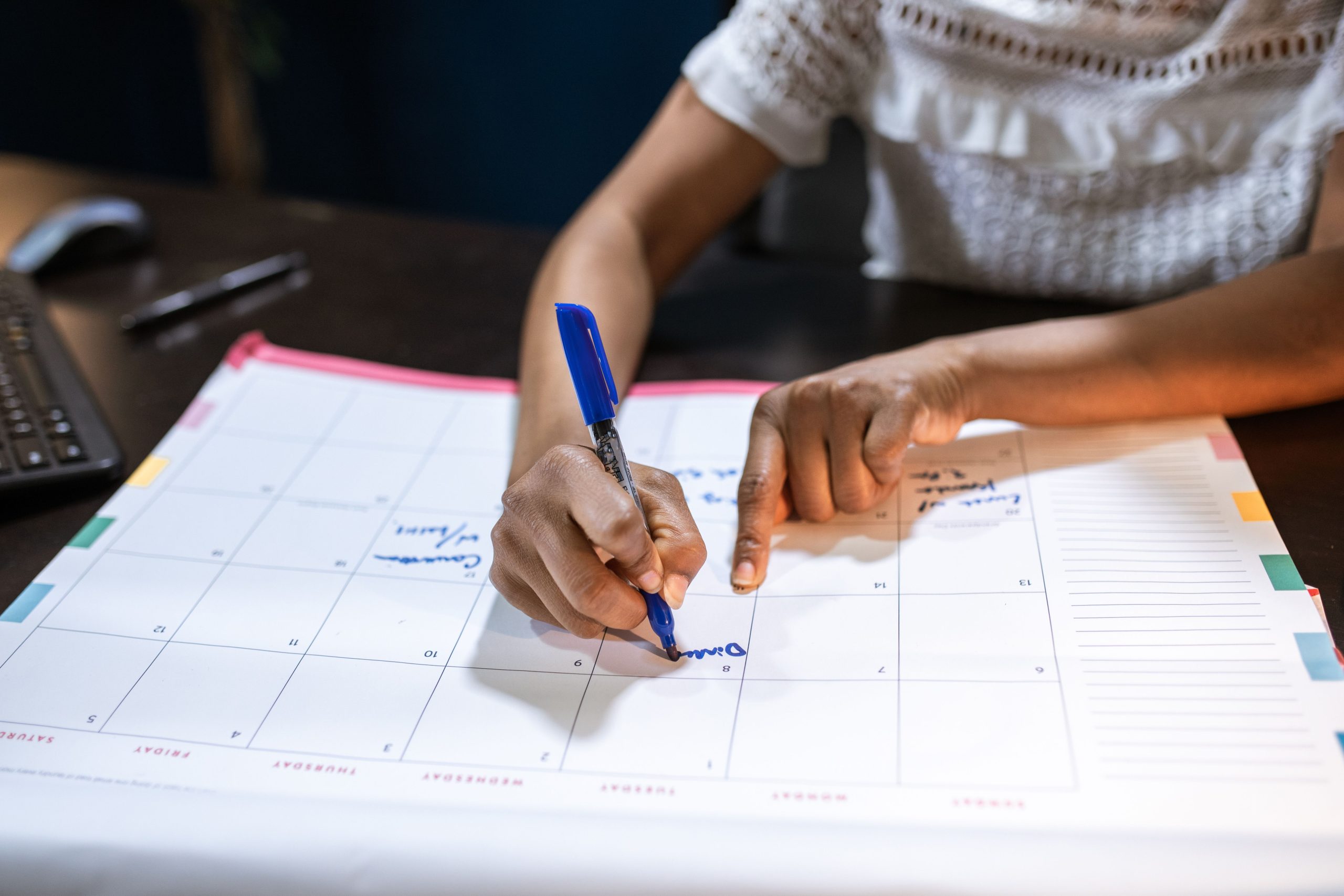
Start with a year-at-a-glance calendar — either printed or digital. Mark everything that will affect your school days before you start filling them in.
Mark your breaks first. Real ones — not aspirational ones. Mark the weeks that will realistically be lighter due to holidays, travel, family commitments, or co-op schedules. Then count your actual school days and compare that number to what your curriculum genuinely requires.
For most families, this single step eliminates more planning anxiety than anything else. It shows you clearly how much time you actually have — before you start making promises to yourself about what you’ll cover.
From there, divide the year into quarters or terms. Assign curriculum milestones to each one. Then resist the urge to plan every single week in detail from the start. Weekly planning is far easier when you’re already working within a framework that accounts for the real shape of your year.
Step 4: Set Up Your Physical Learning Space
Your learning environment matters more than most parents realize.
Research shows that transitions — like starting a new school year — are easier for kids when they have a sense of predictability and routine. A consistent, organized learning space is one of the most practical ways to provide that predictability.
The good news is that you don’t need a dedicated schoolroom. A corner of the kitchen table, a basket of supplies, or a whiteboard on the wall can all work beautifully. What matters is that your child knows where learning happens — and that the space is set up to support focus rather than create friction.
Before school starts, take time to declutter and reorganize your learning space. Stock only the supplies you’ll actually use. Set up a spot for each child’s books and materials so mornings aren’t spent hunting for things. If you use a visual schedule or whiteboard with your kids, get it set up now. That way, it becomes part of the routine from day one.
Step 5: Ease Back Into the Rhythm — Don’t Sprint
One of the most common back-to-school mistakes homeschool parents make is jumping straight to a full schedule on day one. Then they wonder why the first two weeks feel so exhausting.
Sarah Mackenzie is the founder of Read-Aloud Revival and author of The Read-Aloud Family and Teaching from Rest. She recommends easing back into the school year with a gentler first week or two. Focus on read-alouds, light academics, and re-establishing the rhythm of the day before adding the full subject load. That gentle re-entry gives everyone time to adjust — without the overwhelm of a packed schedule from the very first morning.
One practical tip: start adjusting sleep and meal schedules two full weeks before your official start date. Shift bedtimes and morning routines back toward school-year norms gradually. That way, the first day of school doesn’t also feel like the first day of an entirely new daily schedule.
Step 6: Know Where Your Child Stands Before the Year Begins
This is the preparation step that makes the biggest difference in how the whole year goes. It’s also the one most parents skip.
Before the first official school day, assess where each of your children actually stands in each subject. You don’t need formal tests to do this. Just take a clear-eyed look at what they know and what they don’t — so you can make informed decisions about where to start, rather than just picking up where the curriculum left off.
This step is especially important in a few situations. If your child had a rough stretch last spring, a long summer break with minimal academics, or if you’re switching to a new curriculum — this baseline check matters more than ever.
Dr. Carol Dweck is a Stanford psychologist and author of Mindset: The New Psychology of Success. She has spent decades researching how children learn and grow. Her core finding is straightforward: children thrive when they have a clear understanding of where they are and a genuine belief that effort leads to improvement. You can’t build the right scaffold if you don’t know where the ground is. Knowing your child’s starting point isn’t optional — it’s foundational.
Step 7: Set Up GradeHelp Before School Starts — Not After
This is the step we feel most strongly about. It will also have the biggest practical impact on how informed and organized you feel all year long.
GradeHelp works best when you start using it from the very first assignment of the year. It’s not that it doesn’t work if you start later — it absolutely does. But the skill tracking and pattern recognition that makes GradeHelp so powerful gets better with more data. When you upload assignments consistently from day one, you build a full-year picture of your child’s learning. You can see growth from September to June. You can catch patterns early enough to actually do something about them.
Here’s how to get set up before school starts:
Create your account and student profiles now. GradeHelp lets you set up individual profiles for each child. Their work is tracked separately, and the skill data is specific to each student. It takes about two minutes per child.
Add your curriculum or workbooks. When you’re ready to start submitting assignments, you’ll select the workbook or curriculum the page came from. Adding these now means you’re not setting things up in the middle of a busy school day.
Do a practice upload before the year starts. Snap a photo of a completed page from last year’s work and upload it. Get familiar with the interface. See how the grading and skill tagging works. Know what to expect before the real thing begins. That way, submitting your child’s first assignment of the year feels simple — not like another thing to figure out.
Build uploading into your daily or weekly routine. The families who get the most value from GradeHelp make uploading a natural part of their school rhythm. Decide now whether you’ll submit work daily, after each subject, or at the end of each week. Then build that habit from week one.
Once you’re in the rhythm, GradeHelp grades every uploaded page instantly. It provides detailed question-by-question feedback and automatically tracks the skills your child is building — with no manual logging, no spreadsheets, and no end-of-month scramble. You’ll walk into every week of the school year knowing exactly what each child has mastered and exactly where to focus your teaching energy next.
That’s not just good organization. That’s good teaching.
Your Back-to-School Checklist
Before your first day of school, make sure you have:
- ✅ Reviewed last year honestly — what worked, what didn’t, where the gaps are
- ✅ Set clear learning goals for each child for the year ahead
- ✅ Mapped your year calendar with real breaks and milestones
- ✅ Organized your learning space and stocked your supplies
- ✅ Started shifting daily routines back toward school-year norms
- ✅ Assessed where each child is starting in each subject
- ✅ Set up your GradeHelp account and student profiles
- ✅ Done a practice upload and decided on your submission rhythm
That last item is the easiest thing on the list — and one of the highest-impact decisions you’ll make before the year begins.
👉 Try GradeHelp free today — set up your account, add your students, and be ready to track skills and progress from the very first assignment of the year. No credit card required.
For more on intentional homeschool planning and back-to-school preparation, check out Pam Barnhill’s Plan Your Year and Homeschool Better Together podcast at pambarnhill.com and Sarah Mackenzie’s Read-Aloud Revival at readaloudrevival.com. Both are trusted, encouraging resources for homeschool families at every stage.
Tags: homeschool back to school, preparing for homeschool year, homeschool year preparation, back to school homeschool checklist, homeschool planning, GradeHelp, homeschool setup, homeschool organization, new homeschool year, homeschool skill tracking